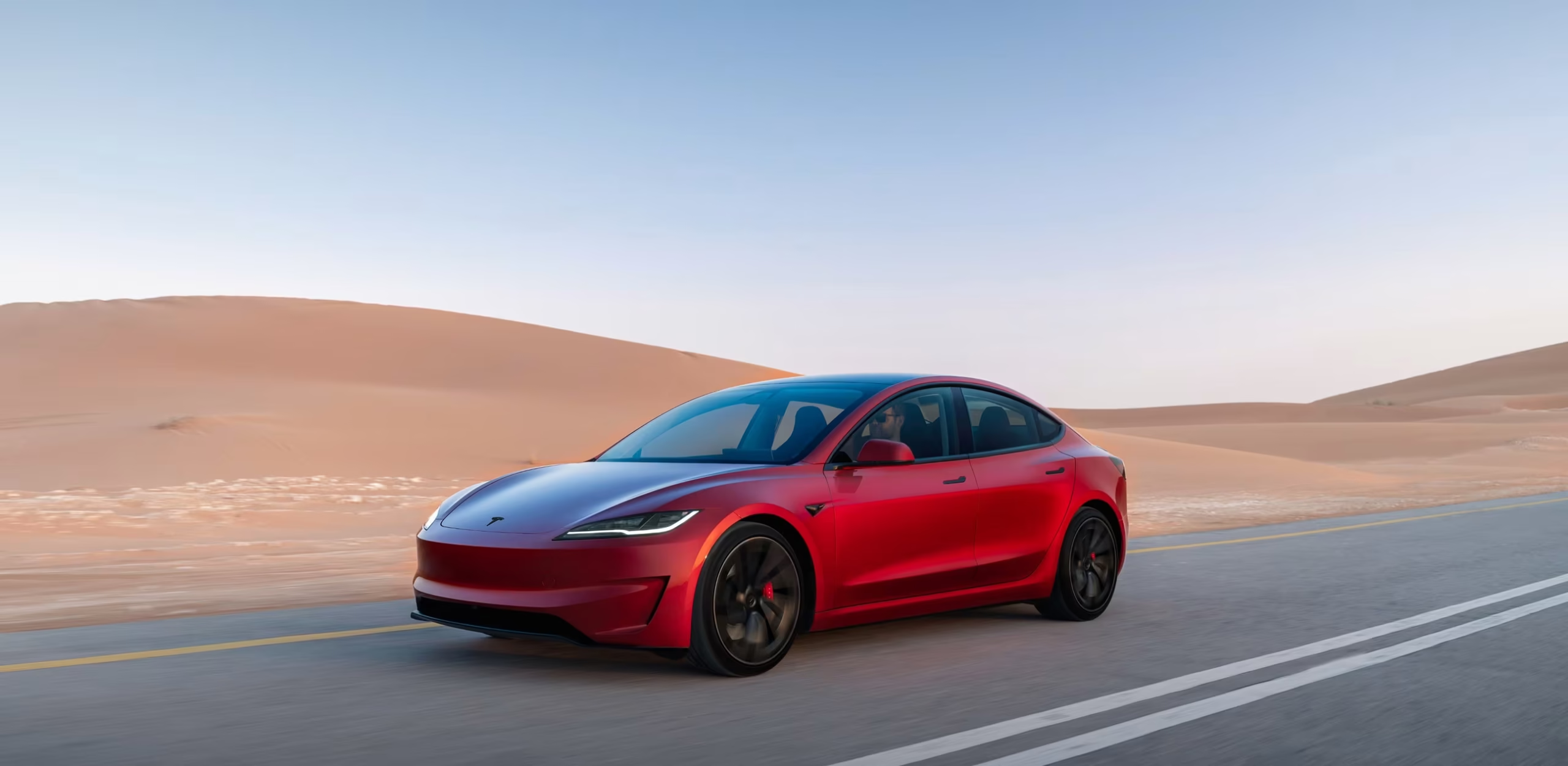
Why the Model 3 RWD Matters
When looking for an electric sedan in the U.S. market, the Tesla Model 3 remains one of the most compelling options. Among its trim variants, the Rear-Wheel Drive (RWD) version appeals to buyers who want Tesla’s brand, technology, and EV ecosystem — but with a more accessible price point and a simpler drivetrain. If you’re searching for “Tesla Model 3 RWD”, it means you’re likely looking for a balance of value, performance and everyday usability, rather than the highest performance trim.
This article dives deep into what the Model 3 RWD offers, how it compares to other trims, and whether it’s the right fit for your driving habits, budget and region.
What “RWD” Means in the Model 3 Context
“RWD” stands for Rear-Wheel Drive, meaning the motor(s) drive the rear wheels only (in this case a single rear motor). In contrast, AWD versions use dual motors (front + rear) to drive all four wheels.
For the Model 3 RWD, key implications include:
- Single motor, rear axle: simpler mechanical setup, fewer drive components, potentially lower cost and weight.
- Efficiency boost: Because there’s no front motor, in many driving scenarios the single motor arrangement can be more efficient.
- Traction trade-off: Since only the rear wheels are driven, in low-traction situations (snow, ice, heavy rain) RWD may be less capable than AWD.
- Performance and cost: RWD trims generally cost less than equivalent AWD trims, though acceleration and all-weather performance are somewhat reduced.
In the Model 3’s ecosystem, the RWD version has served as the entry point for buyers wanting Tesla’s sedan package at the lowest cost while still getting strong range and tech.
What the Official Tesla Site Indicates for Model 3 RWD
On Tesla’s U.S. website for the Model 3:
- Drive options include “Rear-Wheel Drive” and “All-Wheel Drive”.
- Example pricing (via the “Compare” page) lists Model 3 Standard RWD at a lower entry-point price.
- Performance specs given for higher trims (e.g., AWD) provide context for what RWD is being measured against.
Although Tesla’s site may list the RWD version with fewer headline “hero” specs compared to the Performance version, knowing what Tesla officially lists helps you understand what you’re signing for when selecting RWD.
✅ Use our referral link to buy your Tesla Model 3 RWD: ts.la/jacob4310 — save on your Tesla and support our referral program at the same time.
U.S. Market Availability, Pricing & Trim Breakdown of Model 3 RWD
Understanding availability and pricing is vital, especially as Tesla frequently adjusts its lineup and pricing.
- In recent model years (2024-2025) the Model 3 RWD variant has been listed with starting U.S. prices around $38,630 to $44,130 depending on trim and region.
- Historically, earlier RWD variants (or base RWD) had lower range or fewer features, making them distinct from the Long-Range or Performance trims.
- Availability sometimes fluctuated: there were periods when the RWD version was temporarily unavailable in the U.S. market (e.g., production shifts, battery sourcing changes).
- When ordering, check the exact variant: “RWD” may refer to Standard Range RWD or Long Range RWD depending on year/model.
Typical RWD offering features:
- Single motor, rear‐wheel drive
- Good (though not maximum) range — sufficient for many everyday drivers
- Lower starting price than AWD/Performance
- Fewer premium features or driver-assist upgrades may be optional rather than standard.
Performance, Range & Efficiency of Model 3 RWD
How does the RWD version perform in terms of range, acceleration and efficiency? Let’s break down.
Range
- Many Model 3 RWD variants achieve EPA-estimated ranges in the ~250–270 miles range for earlier trims and ~300+ miles for later/ refreshed versions.
- Real-world range will depend on driving style (highway vs urban), weather/temperature, wheel size etc.
Performance (Acceleration)
- While not as fast as the Performance trim, RWD versions still deliver respectable performance — 0-60 mph might range from ~5.0–6.0 seconds depending on year and battery configuration.
- If you pick larger wheels, performance tweaks, or later model refreshes, the numbers may improve.
Efficiency & Charging
- The RWD model’s simpler drivetrain can contribute to slightly better efficiency compared to dual-motor AWD in certain conditions (steady driving, highway).
- Charging: access to the Tesla Supercharger network remains a major advantage. Rapid charging rates will depend on the battery pack, software version, station load and environmental conditions.
What this means in practice
- For typical U.S. commuting (e.g., 30–50 miles a day) the RWD’s range is more than adequate.
- For long-road trips, you’ll want to plan Supercharger stops — RWD models make this feasible given Tesla’s network.
- If you live in a region with heavy winter weather or rely on maximum traction in all conditions, you may notice the traction difference with AWD.
- If you care more about value and everyday usability than ultimate performance or 0-60 times, RWD is a very rational choice.
✅ Use our referral link to buy your Tesla Model 3 RWD: ts.la/jacob4310 — save on your Tesla and support our referral program at the same time.
Interior, Features & Technology in the RWD Version
Choosing the RWD variant doesn’t mean sacrificing everything in terms of features — many of the core Tesla advantages remain.
Interior & Technology
- Large central touchscreen (15” or similar), minimalist controls, software ecosystem with over-the-air updates.
- Seating for up to 5 adults, good cabin space for a sedan (though less cargo volume and ride height compared to an SUV).
- Many convenience features (e.g., Premium Connectivity, Autopilot) may be available or optional depending on trim.
Practical Considerations
- As a sedan, the Model 3 RWD offers a lower ride height, agile handling and efficient aerodynamics.
- Some premium upgrades (e.g., large wheels, premium audio, upgraded interior finish) may cost extra — if you’re opting for the “value” path, check what’s included.
- Charging infrastructure: Home charging setup still applies — you’ll want to install a home wall charger or equivalent for daily use.
Pros & Cons of Choosing the RWD Version
Pros
- Lower cost: Among the most affordable full-feature Tesla sedan configurations.
- Strong range-for-value: RWD offers very good real-world range at a lower price point.
- Simpler drivetrain: Fewer moving parts in the drive system may mean fewer potential issues (though EVs in general already have fewer failure points).
- Tesla ecosystem: Access to Superchargers, software updates, Tesla brand benefits.
Cons
- Traction limitations: Rear-wheel drive is less ideal in slippery, snowy, icy conditions compared to AWD.
- Less ultimate performance: Acceleration and handling may be slightly behind AWD or Performance variants.
- Resale and features: In some markets, buyers may pay premium for AWD/Performance versions, which could affect resale value or perceived “top trim” status.
- Feature trade-offs: Some upgrades may be optional rather than standard in entry RWD trims.
Comparison: Model 3 RWD vs AWD vs Performance
When deciding, here’s how the trims compare in a simplified table:
| Variant | Drive | Approx 0-60 mph* | Approx Range | Best for |
|---|---|---|---|---|
| RWD | Single motor | ~5.0-6.0 s | ~250-300+ miles | Value-focused buyers, daily driving |
| AWD (Dual Motor) | Front + rear | ~4.2-5.0 s | Slightly less | Better traction, all-weather use |
| Performance | Dual motor + sports upgrades | ~2.9-4.0 s | Lower range | Enthusiasts, performance priority |
*Approximate numbers — vary by year/model. Choose based on your priorities: cost vs performance vs all-weather capability.
Ideal Buyer Profile for Model 3 RWD
You should consider the Model 3 RWD if you:
- Are looking for a Tesla sedan with strong tech at a more accessible price.
- Drive mostly in moderate weather (mild winters) or have access to covered/garage parking.
- Commute moderate distances and want an EV with good range without needing top trim performance.
- Value efficiency, software features, and access to the Tesla charging network.
- Want to avoid paying premium for AWD/performance features you may not use.
On the other hand, you might look beyond RWD if you:
- Live in a region with harsh winters or have frequent need for maximum traction.
- Want the highest performance (fastest acceleration, sport mode) available.
- Need SUV-level space or ride height/cargo capacity rather than sedan.
- Plan to use the vehicle in conditions where AWD is strongly beneficial (e.g., off-road, mountains, remote snow).
Buying Tips: Incentives, Resale & Ownership for RWD Version
Incentives & Tax Credits
- The U.S. federal EV tax credit may apply depending on the model year, battery sourcing and other rules. Confirm that the specific Model 3 RWD trim you select is eligible.
- State or local incentives may stack (rebates, HOV lane access, utility credits) but vary by state.
- Tesla sometimes adjusts trim availability/pricing, so act at the right moment if incentives are changing.
Resale Value & Depreciation
- Tesla models in general hold value relatively well, but condition, battery health, software updates and market demand matter.
- RWD versions may appeal to buyers seeking value — but if the market strongly prefers AWD/Performance, resale value could be slightly affected.
- Maintain the vehicle properly, keep charging logs if possible, stay up to date on software updates.
Configuration & Options
- Decide early whether you want “value” or “premium” features: e.g., upgraded wheels, premium paint, additional driver assist/full self-driving.
- Consider battery size and pack type: Later model RWD versions tend to offer better range/efficiency.
- For long-term ownership: check home charging cost, installation, electricity rates, and whether supercharging costs/availability matter for you.
Timing & Delivery
- Because Tesla changes pricing often, monitor website updates.
- If ordering new, check delivery times, inventory availability, and whether incentives are about to change.
- If buying used: check battery condition, software version, warranty status, and how the previous owner used the car.
✅ Use our referral link to buy your Tesla Model 3 RWD: ts.la/jacob4310 — save on your Tesla and support our referral program at the same time.
Conclusion & Final Thoughts
The Tesla Model 3 RWD offers one of the best packages in the U.S. EV sedan market for buyers seeking value, strong range, and Tesla’s technology. It may not offer the absolute fastest acceleration or the topmost all-weather traction, but for many everyday drivers it strikes a smart balance.
If you drive mostly in favorable conditions, value cost-effectiveness, and want a Tesla sedan rather than an SUV or performance flagship — the Model 3 RWD is definitely worth serious consideration.
Before you commit: check the exact year, variant, battery/charging specs, incentives, and test-drive it. Make sure the version you get aligns with your driving environment, budget and longer-term plans.
Tesla Model 3 RWD — FAQ
1. What does RWD mean in the Tesla Model 3?
RWD stands for Rear-Wheel Drive, meaning only the rear wheels are powered by a single electric motor. This setup simplifies the drivetrain and improves efficiency compared to dual-motor AWD.
2. How many motors does the Tesla Model 3 RWD have?
It has one electric motor mounted on the rear axle, unlike AWD or Performance versions which use two motors.
3. What is the range of the Tesla Model 3 RWD?
Depending on the year and configuration, the EPA-estimated range is between 250 and 320 miles per charge. The 2025 refresh may exceed 360 miles according to preliminary estimates.
4. How fast is the Tesla Model 3 RWD from 0 to 60 mph?
Typical acceleration is 5.3 – 5.8 seconds, making it faster than most gasoline sedans in its class, though slower than the AWD and Performance trims.
5. How much does the Tesla Model 3 RWD cost in the U.S.?
As of late 2025, the starting MSRP for new RWD trims is around $38,000 – $44,000, depending on configuration and local incentives.
6. Is the Model 3 RWD eligible for federal EV tax credits?
Eligibility changes depending on battery sourcing and manufacturing location. Always verify on Tesla’s website and the IRS Clean Vehicle Credit list before purchase.
7. Does the Model 3 RWD charge at Superchargers?
Yes. Every Model 3 RWD has full access to the Tesla Supercharger network (and many third-party DC fast chargers with the proper adapter).
8. How long does it take to charge the Model 3 RWD?
At a Tesla Supercharger (up to 250 kW), you can add up to 175–185 miles in about 15 minutes. Home Level 2 charging usually takes 6–9 hours from 0–100%.
9. What kind of battery does the Model 3 RWD use?
Most RWD variants use LFP (Lithium Iron Phosphate) batteries — known for durability, safer chemistry, and the ability to charge to 100% daily without significant degradation.
10. Can the Model 3 RWD handle snow or icy roads?
Yes, but with limitations. RWD provides less traction than AWD, so winter tires are strongly recommended for snowy climates.
11. Is the Model 3 RWD a good daily driver?
Absolutely. It’s quiet, efficient, and smooth. Many U.S. owners use it as a daily commuter for its low running costs and comfortable ride.
12. What’s the difference between RWD and Long Range versions?
The Long Range trim adds a second motor (AWD), extending range and improving acceleration. The RWD focuses on affordability and efficiency with a single motor.
13. Does the Tesla Model 3 RWD have Autopilot?
Yes. Basic Autopilot is standard, and you can optionally upgrade to Enhanced Autopilot or Full Self-Driving (FSD) capability via software purchase.
14. How often does Tesla update the Model 3 RWD?
Tesla introduces software updates regularly (every few weeks) and design refreshes roughly every 2–3 years. The 2024 “Highland” version was the latest major update.
15. How reliable is the Tesla Model 3 RWD?
Overall reliability is good, particularly for the drivetrain. Some owners have reported minor issues with trim or infotainment bugs, but EV maintenance needs are very low.
16. What maintenance does the RWD version require?
No oil changes. Main items include tire rotations, brake fluid checks, air-filter replacements, and occasional software calibration. Battery and motors require minimal service.
17. Can I tow with a Tesla Model 3 RWD?
Tesla doesn’t recommend heavy towing for RWD trims in the U.S. The Model Y is better suited for towing; Model 3 RWD is optimized for efficiency and handling.
18. What’s the warranty on the Model 3 RWD?
Tesla provides an 8-year or 100,000–120,000 mile battery and drive-unit warranty (depending on trim), plus a 4-year / 50,000 mile basic vehicle warranty.
19. How does the Model 3 RWD compare with other EV sedans?
It competes with Polestar 2, Hyundai IONIQ 6, and BMW i4 eDrive35. The Tesla typically offers a better charging network and efficiency, while rivals may have more traditional interiors.
20. Is the Model 3 RWD worth it in 2025?
For most drivers, yes. It offers Tesla quality, range, and performance at the best price point in the lineup — ideal for first-time EV buyers and commuters in mild-weather states.