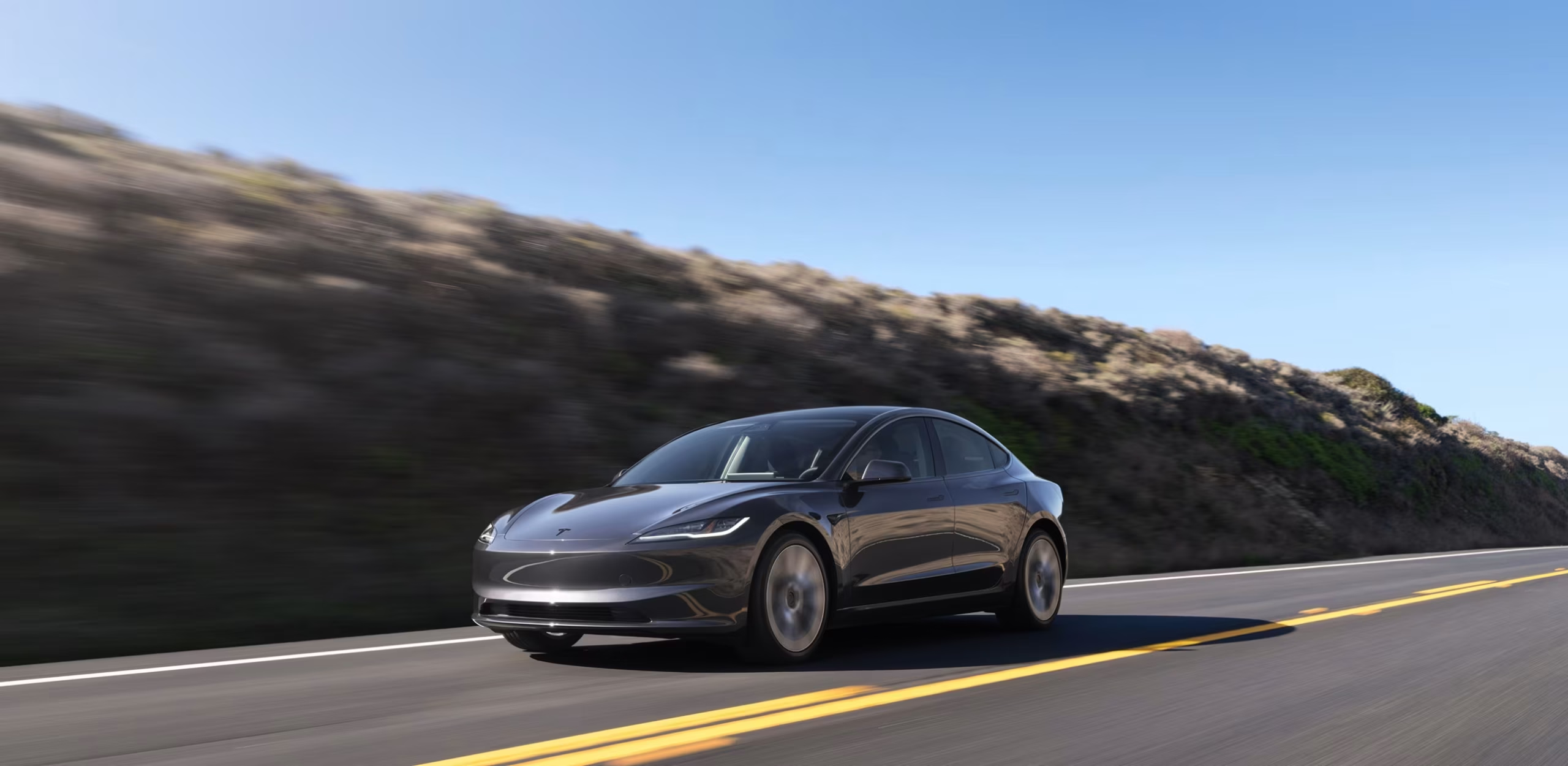
Why the Model 3 Still Matters
The Tesla Model 3 is a compact electric sedan that has played a pivotal role in popularizing EVs in the U.S. market. It blends Tesla’s signature tech (software updates, Supercharger network, large touchscreen interface) with a body style many buyers are comfortable with: a sedan rather than an SUV.
For buyers searching for “Tesla Model 3 sedan”, this article dives deep into what the vehicle offers today, what its strengths are, and what you should watch out for — particularly in the U.S. market.
What the Official Tesla Site Says
According to Tesla’s U.S. website for the Model 3:
- Specs for the Premium models: For example, the “Long Range” AWD version: EPA est. 346 mi, acceleration ~4.2 s (0-60 mph).
- Dimensions: 185.8 in length, 76.1 in width (mirrors folded) for the RWD/Long Range variant.
- Charging: Supercharging up to ~250 kW, and “up to 185 miles added in 15 minutes” for some trims.
- Drive / battery options: RWD and AWD versions (and Performance trim) listed.
- Pricing (via “Compare” page): Example starting price for Model 3 Standard RWD: ~$38,630 (subject to change) in U.S.
In short: Tesla presents the Model 3 as a performance-capable, tech-rich electric sedan with strong range and rapid charging; the official site gives the foundational specs you’ll see quoted in reviews and listings.
U.S. Market Pricing & Trim Overview
Here’s a U.S. snapshot of how the Model 3 is positioned today (2024/2025 model years) and how trims break down:
- According to Car & Driver, the 2025 Model 3 starts at ~$44,130 in the U.S. depending on trim.
- Per Edmunds, the 2025 Model 3 Long Range RWD has a base MSRP around ~$42,490 (excluding destination fees) in U.S. listings.
- On Tesla’s “Compare” page, pricing examples: Model 3 Standard RWD ~$38,630, Premium RWD ~$44,130, Premium AWD ~$49,130, Performance AWD ~$56,630.
Key take-aways for buyers:
- The Model 3 remains more affordable (among premium EVs) though pricing can fluctuate.
- Trim levels matter: RWD vs AWD vs Performance significantly change price, range, and performance.
- Always verify current pricing in your state (including destination, taxes, incentives) because Tesla updates often.
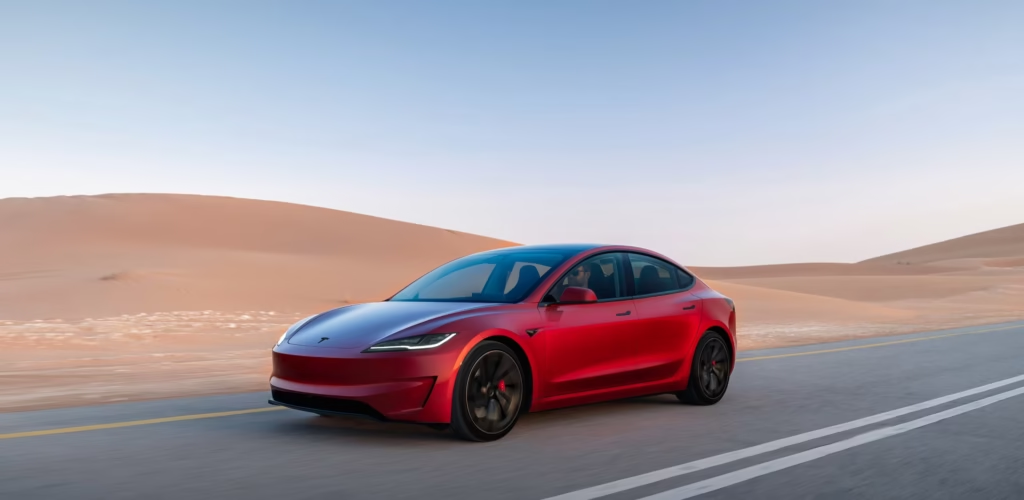
Performance, Range & Charging
One of the most important aspects of an EV is how far it can go, how fast it accelerates, and how practical it is in real-world usage.
Range & Efficiency
- Official Tesla data: For the RWD/Long Range variant, ~363 miles EPA estimate was listed.
- Car & Driver note shows for 2025: Long Range RWD and AWD versions offering “estimated 363 and 346 miles” respectively.
- Real-world efficiencies vary based on driving style, weather, wheel size, etc.
Performance (0-60 mph, top speed)
- From Tesla: Performance trim 0–60 mph ~2.9 s for the Performance version.
- The Drive reports the 2025 Model 3 Performance does ~2.9 s with dual-motor ~510 hp.
Charging
- Tesla Supercharger up to ~250 kW (depending on version).
- Example: “Up to 185 miles added in 15 minutes” for certain trims.
- Real charging speed will depend on charger availability, battery temperature, state of charge.
What this means in practice
- For many U.S. drivers, a 300+ mile range is comfortable for daily commute + occasional long drives.
- Rapid charging via Supercharger network gives long-distance capability.
- If you choose the Performance trim, you get sports-car levels of acceleration; if you choose a base/long-range RWD, you still get very good performance.
- Efficiency matters: wheel size, cold climate, aggressive driving will reduce range.
Interior, Technology & Practicality
A big part of the appeal of the Model 3 is its tech-forward cabin and practical sedan layout.
Interior & Technology
- Large 15.4″ central touchscreen, and an 8″ rear touchscreen for some configurations.
- Minimalist interior design: very few physical buttons, clean dashboard.
- Seating for up to 5 adults, standard cargo capacity ~24 cu ft trunk.
Practicality
- Dimensions make it suitable for urban/suburban use: Length ~185.8 in, Height ~56.7 in for many versions.
- Rear seating and trunk space are competitive for this class of vehicle.
- As a sedan rather than SUV, you may sacrifice ground clearance / higher seating position but gain better aerodynamics and often better efficiency.
Software & Updates
- Like other Teslas, the Model 3 benefits from over-the-air updates: new features, optimisations, sometimes performance enhancements.
- The connectivity, infotainment, and user experience are strong selling points.
Safety, Reliability & Ownership Costs
Safety
- The Model 3 has strong safety credentials and is often cited by reviewers as safe and stable. (Many crash-test scores are good; always check latest data for your model year.)
- Use of a battery pack under the floor helps lower the centre of gravity, improving stability.
Reliability & Ownership
- EV advantage: fewer moving parts compared to internal combustion vehicles (no oil changes, fewer mechanical failures).
- However: Build-quality variations, software bugs, and service delays have been reported for some owners. For example, Edmunds noted in owner reviews that some drivers complain of build-quality issues and software glitches.
- Battery warranty: According to Tesla specs: 8 years or a certain mileage (varies) for battery & drive unit.
Costs to watch
- Electric charging cost, home charging setup cost (wall-charger installation).
- Insurance can be higher for premium EVs / performance trims.
- Resale value: While Teslas generally hold value well, it will depend on battery health, model year, mileage, and market.
- Incentives: U.S. federal tax credits, state incentives — check eligibility for your specific version/year.
Pros & Cons of Choosing the Model 3
Pros
- Strong value: Among premium EV sedans, the Model 3 offers excellent range, performance, and tech.
- Tesla supercharger network: access to one of the most extensive fast-charging networks in the U.S.
- High performance available: Even the non-Performance trims offer good acceleration.
- Future-proof features: Over-the-air updates, strong software ecosystem.
- Practical sedan body: Easier to maneuver in cities, good efficiency.
Cons
- Build quality concerns: Some owners report fit-and-finish issues, squeaks/rattles, software annoyances.
- Minimalist controls: Some drivers miss more traditional physical buttons/knobs (everything is via screen).
- Price fluctuations: Tesla frequently adjusts pricing and trims, which can affect resale and buying timing.
- Sedan vs SUV trade-offs: If you need large cargo or higher ride height, an SUV might be more suitable.
- Availability & incentives: Some trims may lose eligibility for incentives depending on battery sourcing/manufacturing. (E.g., see news about the most affordable variant being discontinued.)
How the Model 3 Compares With Alternatives
When considering the Model 3 sedan, it helps to compare it with peer electric sedans or premium mid-size sedans.
Key competitors might include:
- Polestar 2 (electric)
- BMW i4 (electric)
- Tesla Model Y (if you’re considering an SUV instead)
- Premium ICE sedans (e.g., BMW 3 Series, Audi A4) for non-EV cross-shopping
Where Model 3 stands out: Exceptional range/performance at its price point (especially if you catch a good deal), Tesla’s charging network, and strong brand in EV space.
Where you might pick a competitor: If you want more cargo/space (SUV), more traditional luxury finish, or guarantees of service network in more remote areas.
Buying Tips: Incentives, Resale & Ownership
Incentives & Tax Credits
- In the U.S., federal EV tax credit eligibility depends on vehicle configuration (battery sourcing), phase‐out status, and trim. Make sure the specific Model 3 you order qualifies.
- Many states and utility companies offer additional incentives (rebates, HOV lane access) — check your state.
- Tesla sometimes adjusts trims/availability unexpectedly (for example, discontinuation of the Standard Range variant).
Resale Value & Depreciation
- Teslas tend to hold value fairly well, given brand demand and charging network.
- Factors that influence resale: battery health, mileage, software update status, condition, remaining warranty.
- Market conditions: The EV market is evolving rapidly — new models, incentives, competition can affect future resale.
Configuration & Options
- Decide on what matters most for you: range? performance? AWD vs RWD? Wheels size?
- Larger wheels often reduce range/efficiency; if range is key, consider smaller wheels/efficient tyres.
- Consider your home charging setup: installation cost, available power, location of the car.
- If you plan long trips: check available Superchargers in your area/route.
Timing & Negotiation
- Because Tesla frequently updates pricing, monitor the website for changes.
- If buying used: check service history, condition, battery health, option list.
- For new orders: consider availability, expected delivery timing, potential incentives or promos.
✅ Use our referral link: ts.la/jacob4310 — save on your Tesla and support our referral program at the same time.
Conclusion & Final Thoughts
The Tesla Model 3 sedan remains a standout choice in the electric-sedan market in the U.S. It offers excellent range, strong performance, and a well-integrated charging network. For many buyers looking to shift to EVs and who value tech and brand, the Model 3 is a very compelling package.
However, it’s not without trade-offs: build quality can vary, pricing is dynamic, and you’ll want to check that your exact configuration qualifies for the incentives you expect. If your priorities include maximum space (cargo, higher ride), or you prefer a more traditional luxury feel, you’ll want to compare alternatives too.
If your driving habits align with the Model 3’s strengths (daily commuting, occasional road trips, want high tech, want EV entry into Tesla brand), then this sedan is worth serious consideration.
Frequently Asked Questions (FAQ)
Q1: What’s the difference between Model 3 RWD vs AWD?
The RWD variant uses a single motor on the rear axle; the AWD version uses dual motors (front + rear), offering better traction and generally quicker acceleration, though often at higher cost and slightly lower efficiency.
Q2: What should I expect for charging if I don’t have a Tesla Supercharger nearby?
You’ll want a Level 2 home charger (Wall Connector or compatible unit) for overnight charging. For long trips, Supercharger network is strong in many regions but check route maps. Charging speed depends on battery state, ambient temperature, and station load.
Q3: How many miles can I expect in real life with the Model 3?
While EPA estimates (300+ miles) are good benchmarks, real range will vary: driving speed, weather (cold reduces range), route terrain, wheel/tyre size, and how much you charge/maintain. For many commuters, 200–300 miles per charge is realistic.
Q4: Does the Model 3 qualify for the full $7,500 U.S. federal EV tax credit?
It depends on model year, battery sourcing/manufacturing, your tax situation and whether Tesla placed the vehicle in service before phase-out. Always confirm with Tesla and IRS guidance for your exact trim/year.
Q5: Is it still worth buying a new Model 3 in 2025?
Yes — if you value Tesla’s ecosystem, tech updates, Supercharger access, and the sedan form. But do your homework: compare trims, check pricing, assess incentive eligibility, and test drive to ensure the vehicle fits your needs.
Comments
One response to “Tesla Model 3 Sedan – In-Depth Guide for U.S. Buyers”
[…] Tesla Model 3 Sedan RWD – In-Depth Guide for U.S. Buyers […]